Eight Years with the Canon G1X Mark III
Still the Only Camera That Does What I Need
After eight years and about 13,000 frames, the Canon G1X Mark III is still the only camera that fits its slot: a true pocketable APS-C compact with weather sealing and a built-in EVF. It has aged poorly in many ways but the image quality has held up, the durability has exceeded any reasonable expectation, and it has quietly become part of my large format film workflow.
It’s not the best camera I have, but it’s the best camera I have on me.
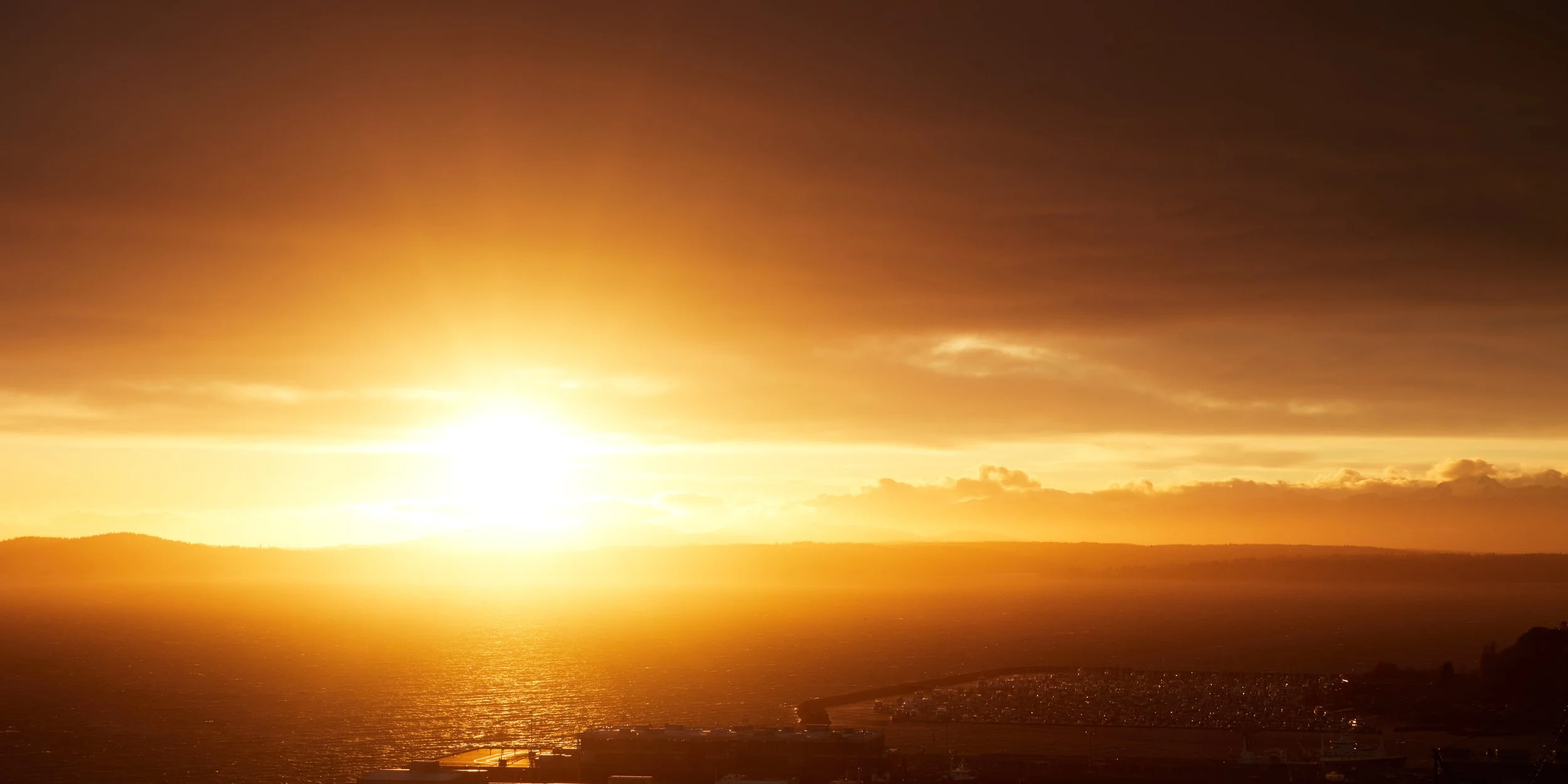
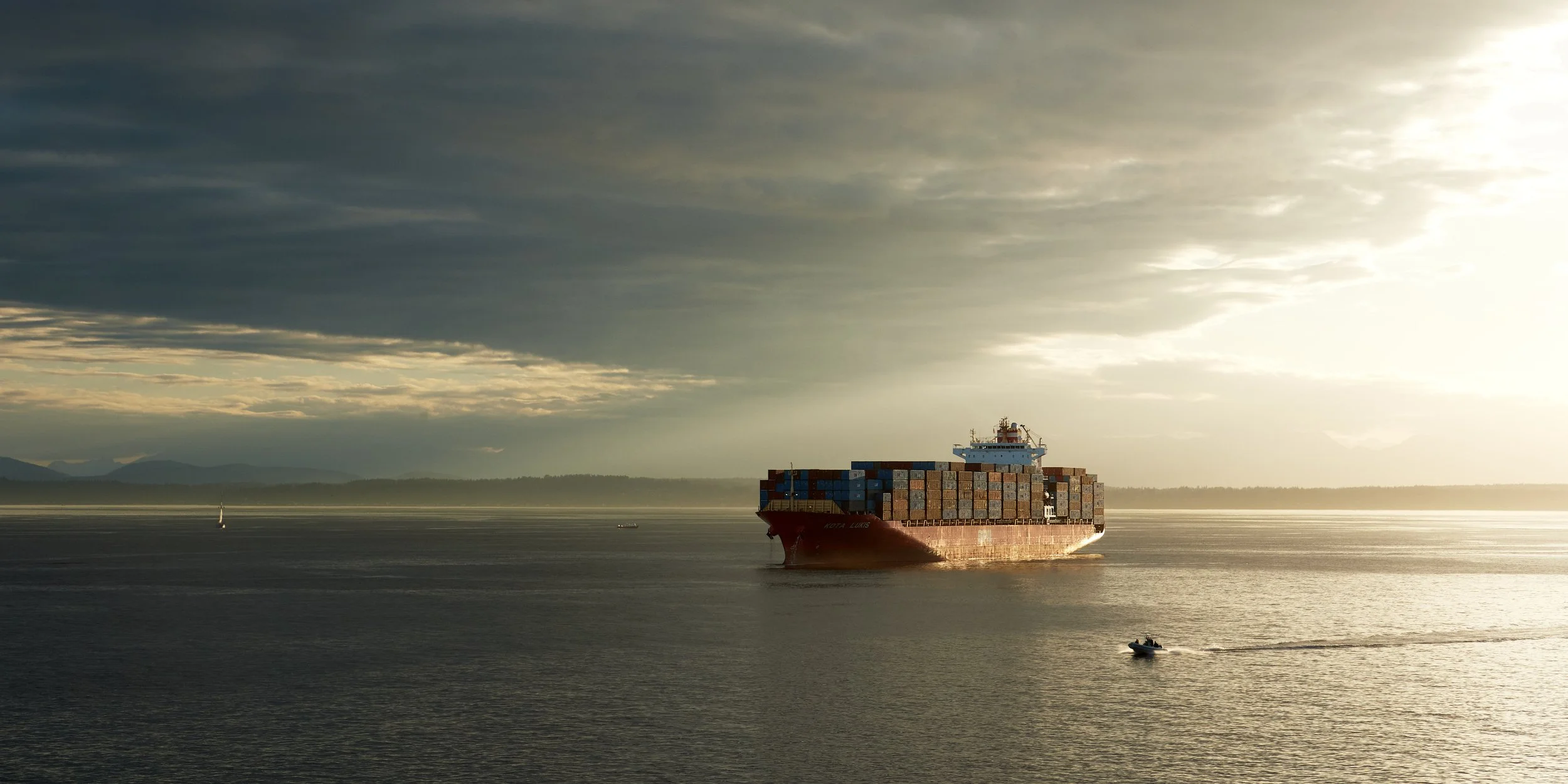
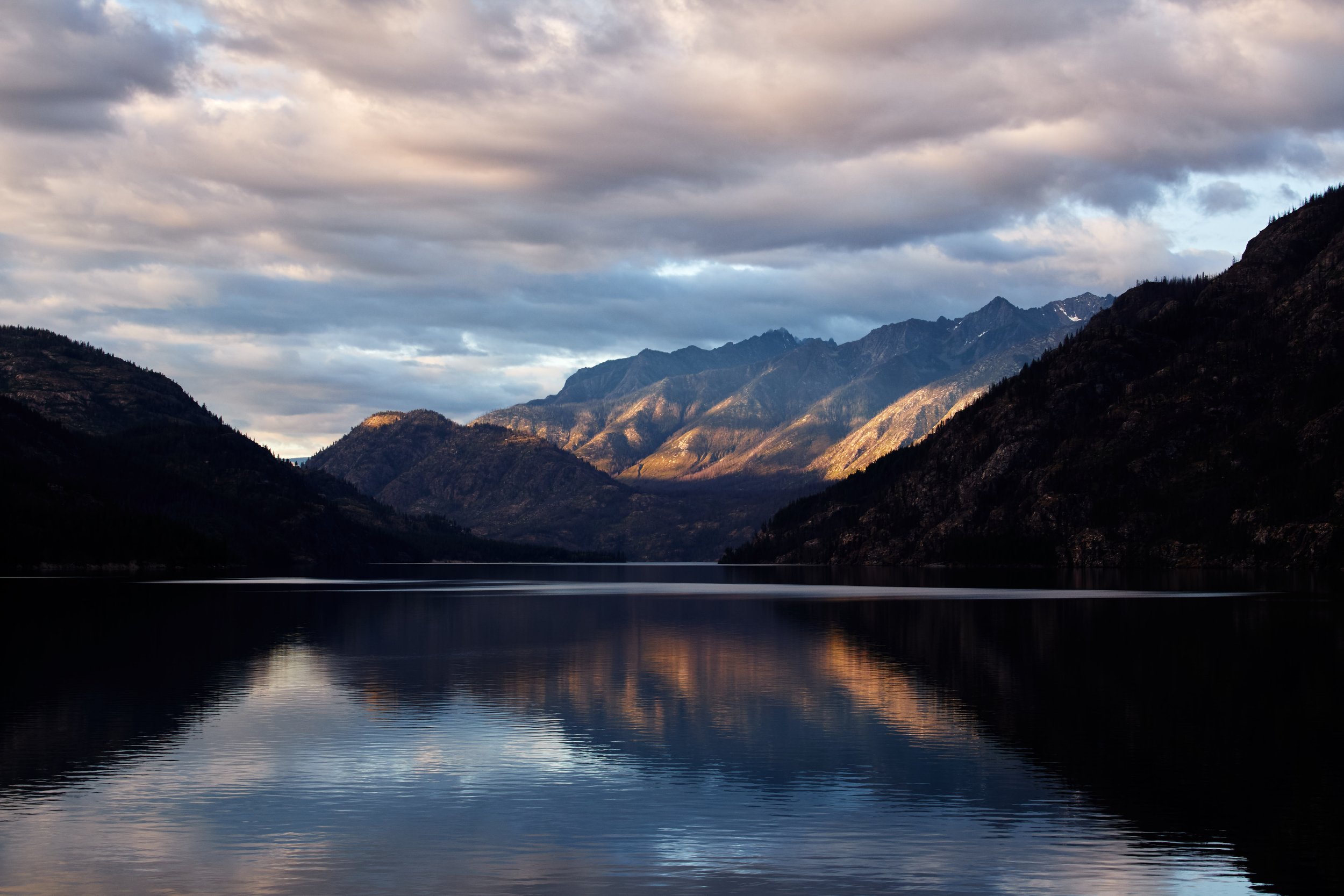
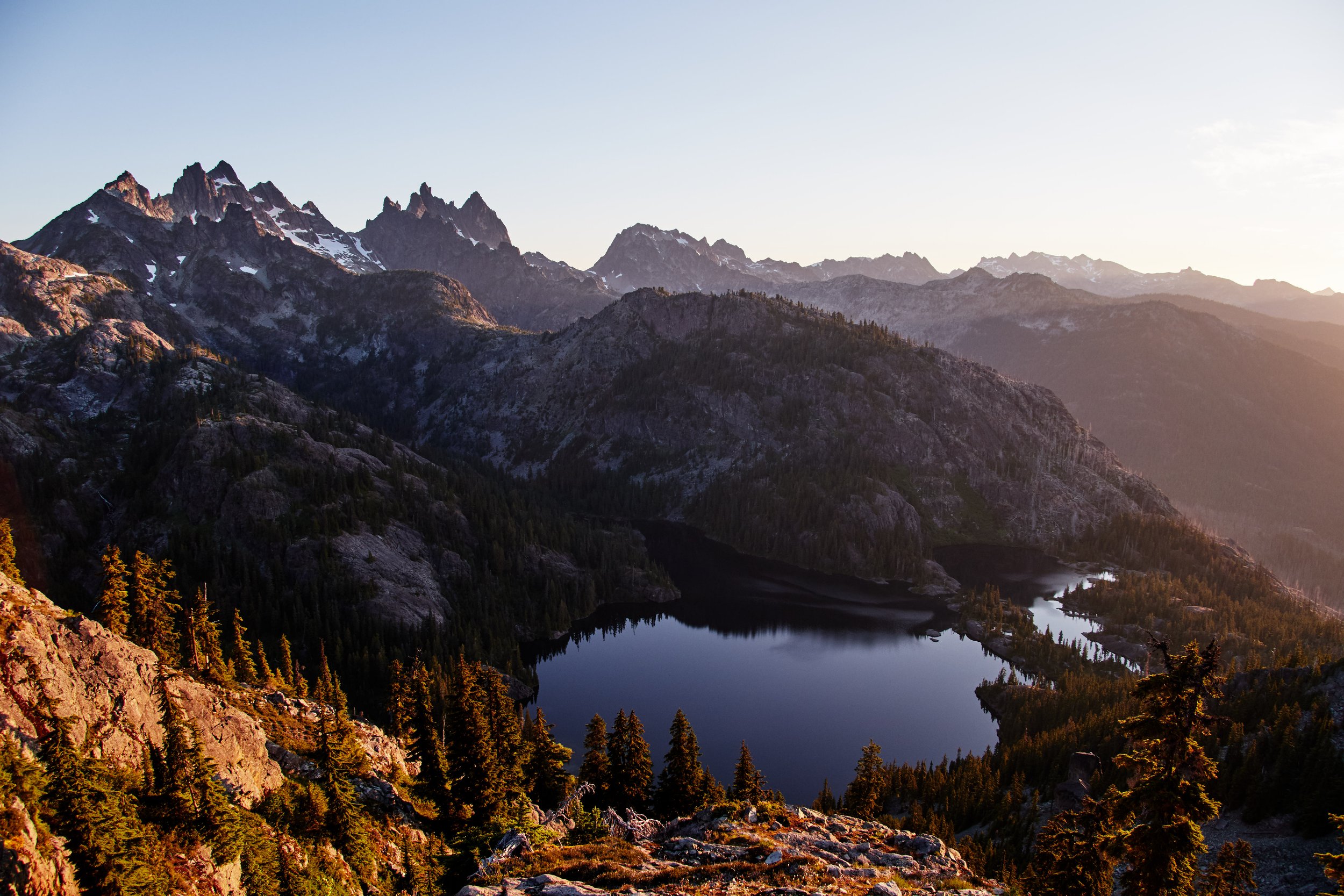
Puget Sound 2024
Why I Bought It

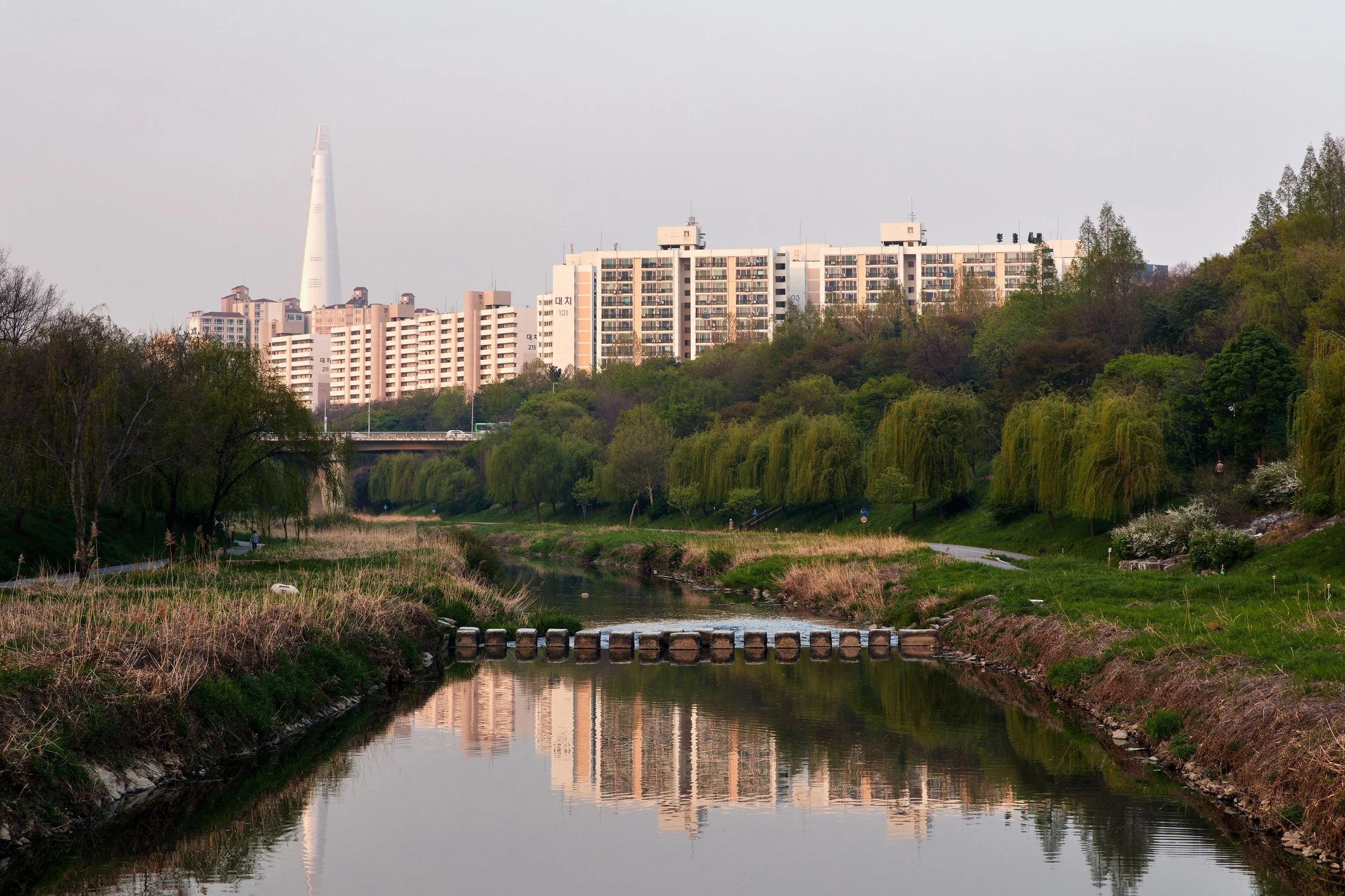
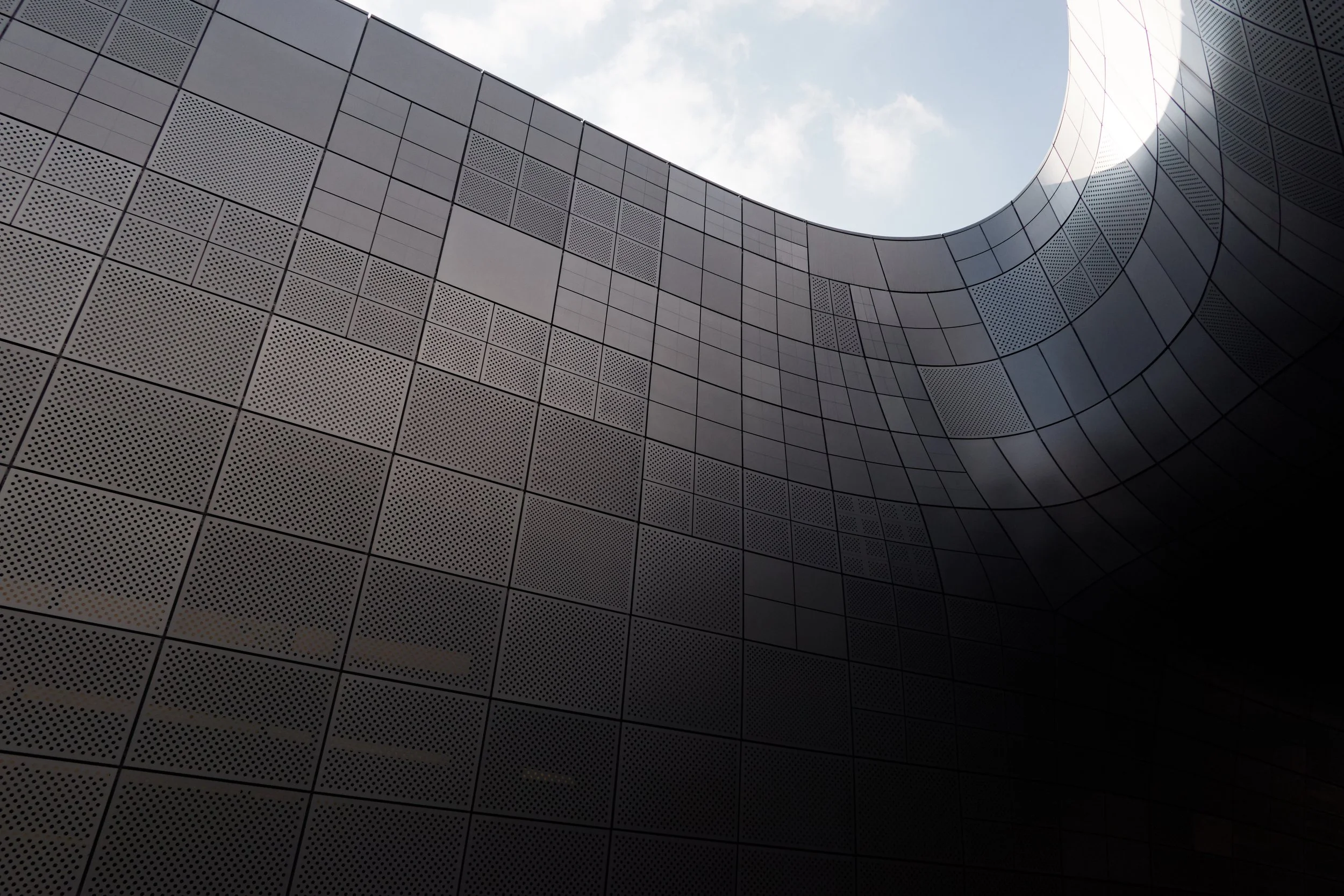
Jamsil Tower in the background. South Korea 2018
In January 2018 I was living in South Korea and I wanted a real camera I could actually carry every day. I did not want to lug a DSLR around Seoul or onto weekend trips, and I did not want to settle for a phone. The G1X Mark III hit a very specific sweet spot: an APS-C sensor in a body that fit in a jacket pocket, a usable zoom range, a leaf shutter, weather sealing, and a built-in EVF. On paper it was the only camera that checked every box I cared about. I still ended up carrying the heavy gear a lot but eight years later that is still true, which is part of what this post is about.
It was a rather big expense for me at the time but I am happy I pulled the trigger - more so than with a lot of other gear.
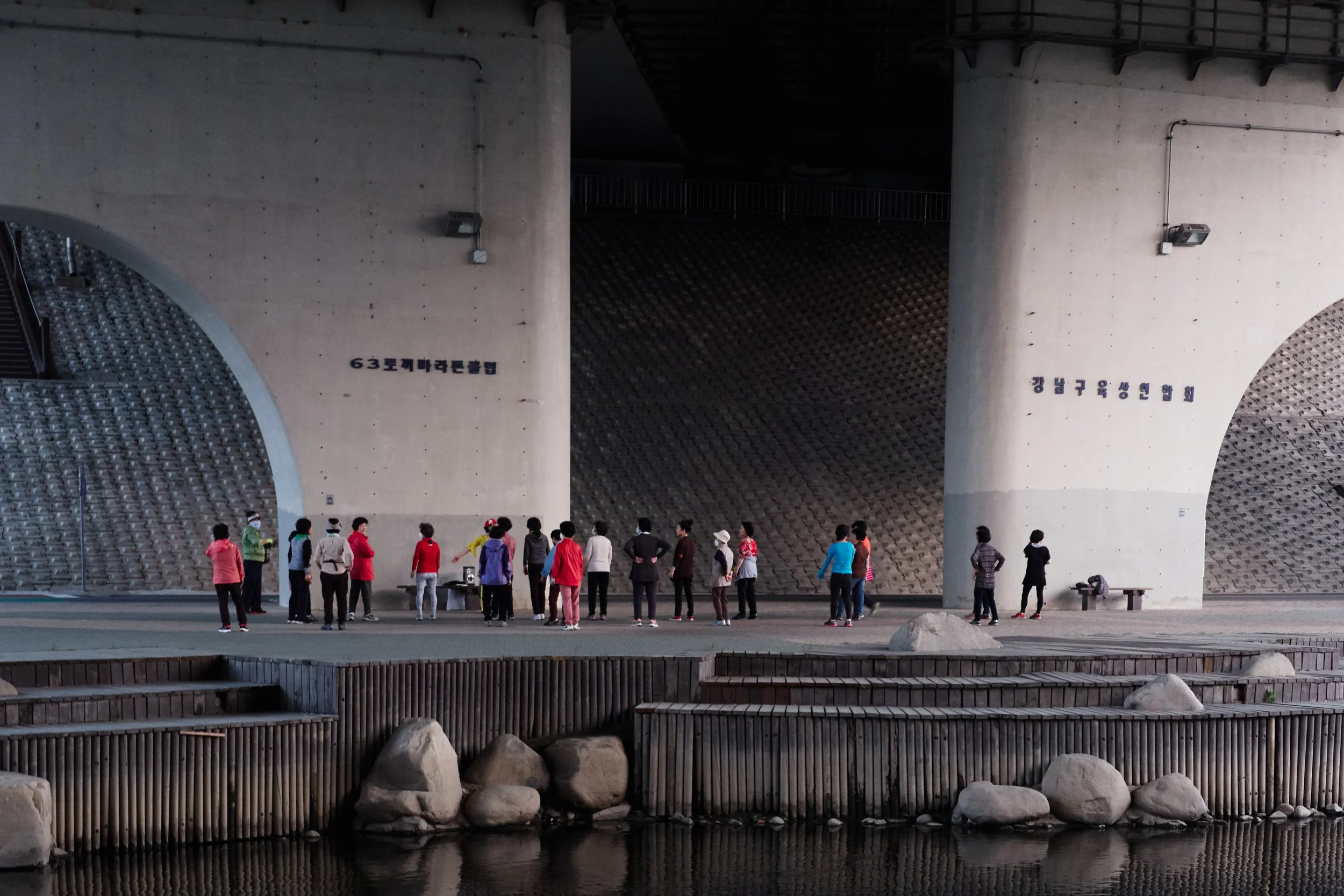
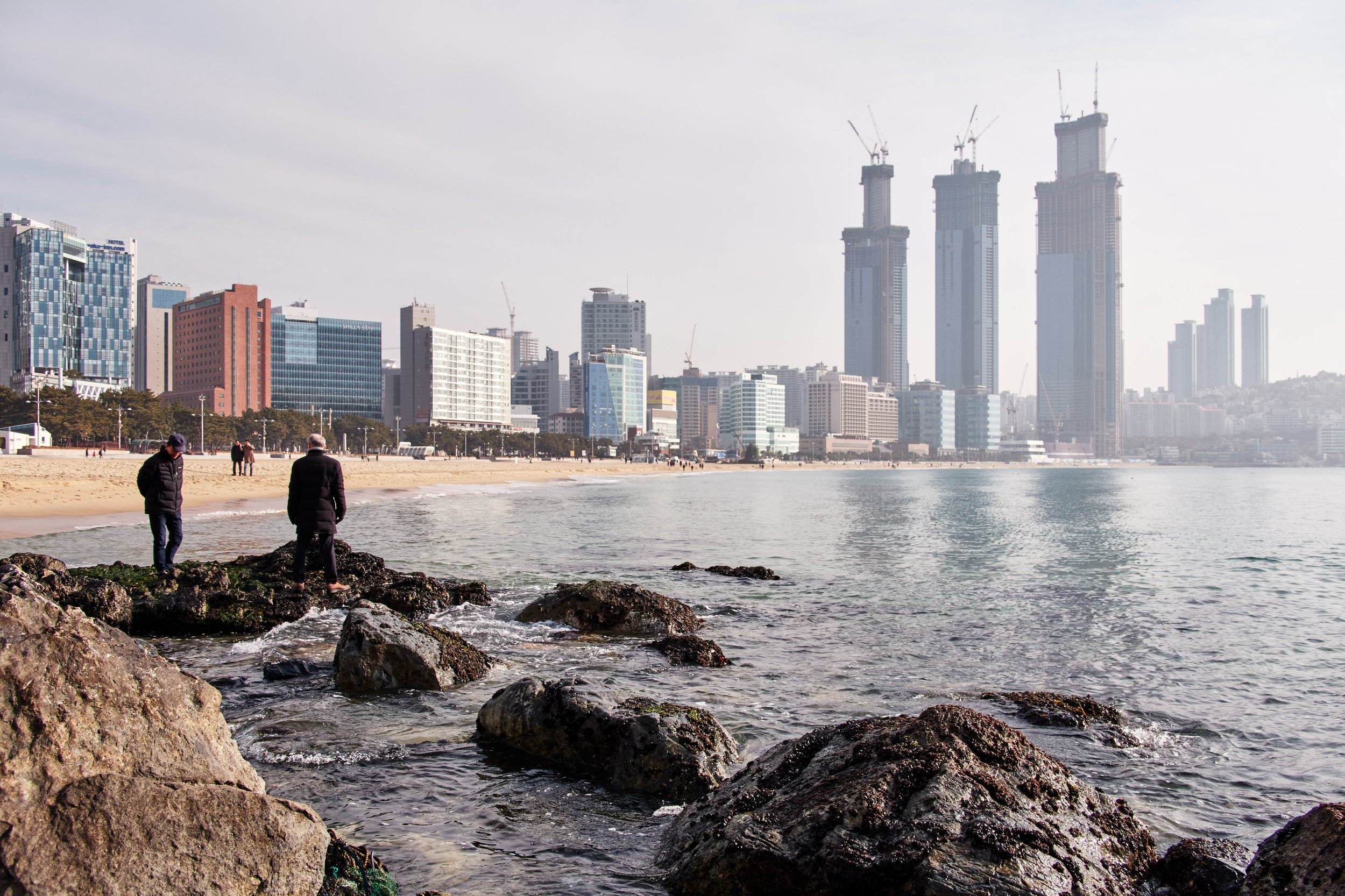
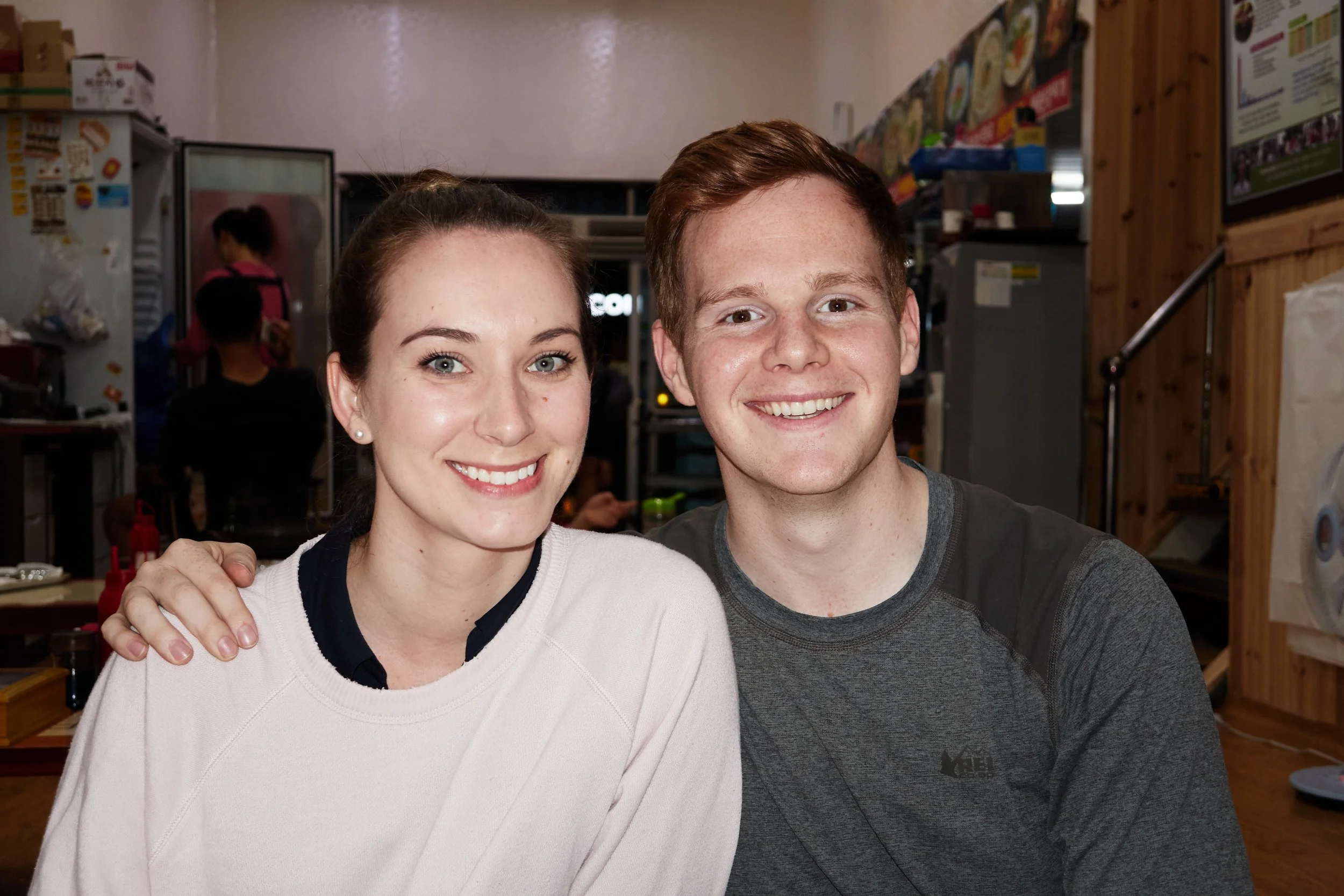
Exercise session along the Han river in South Korea 2018
How I Actually Use It

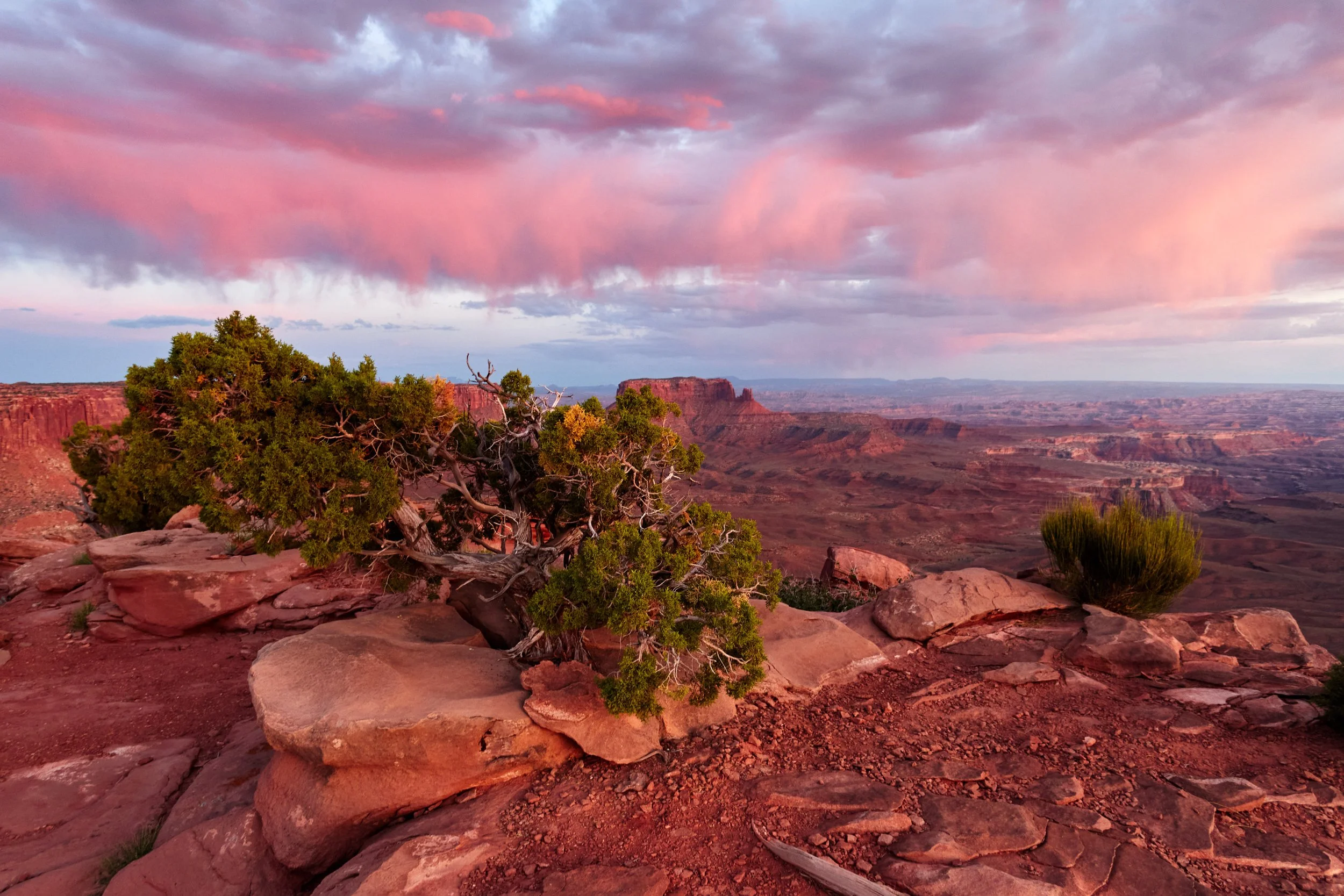
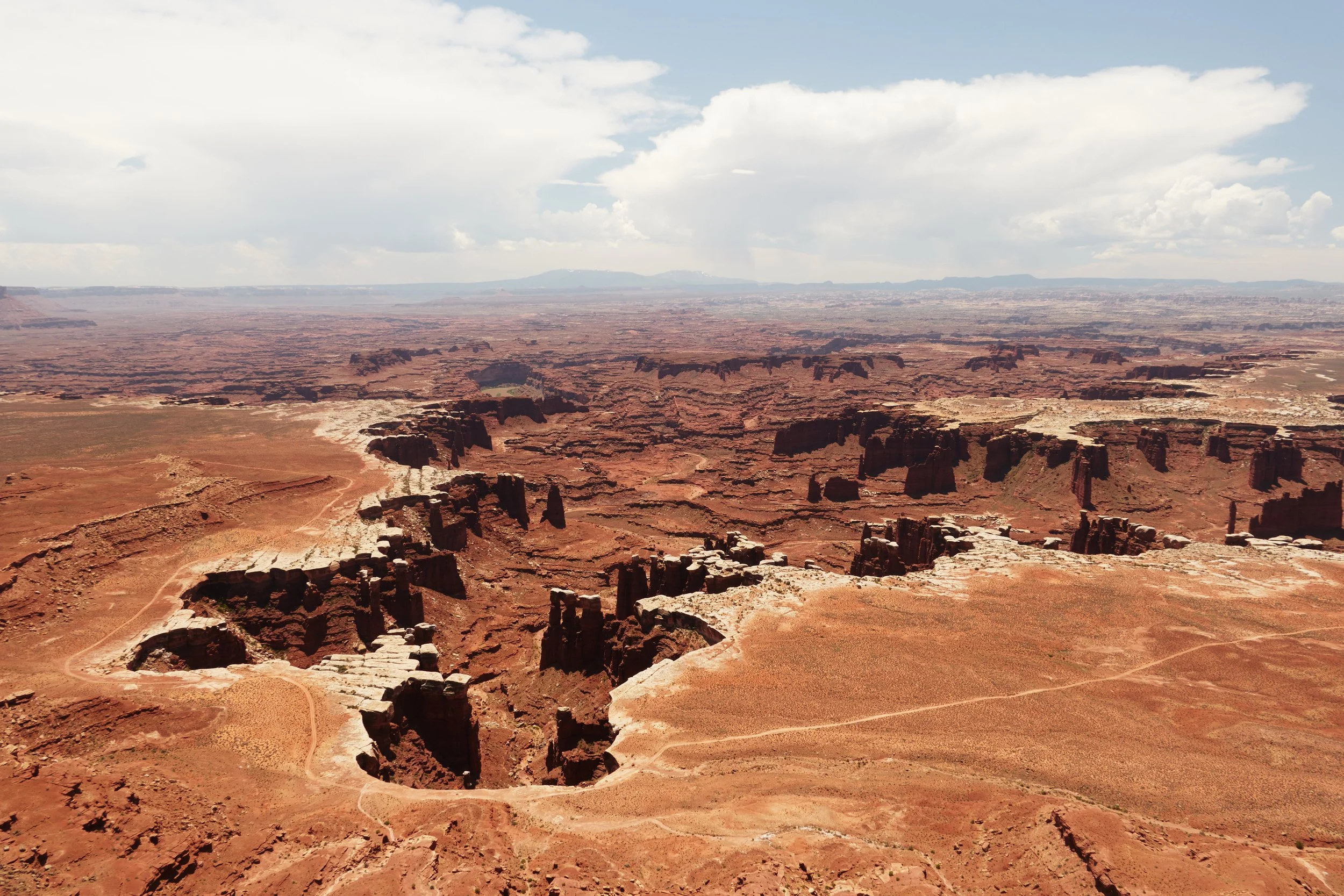
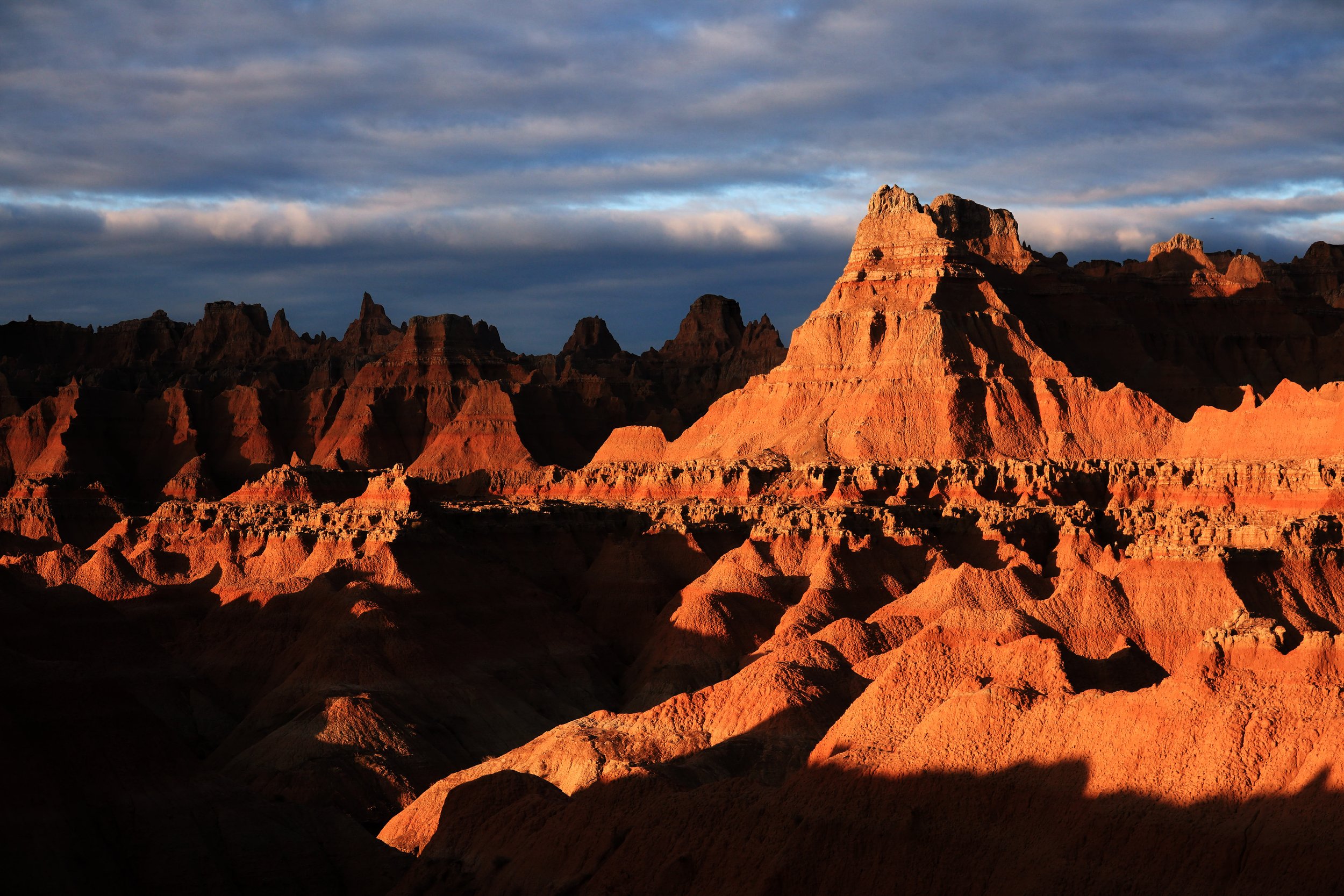
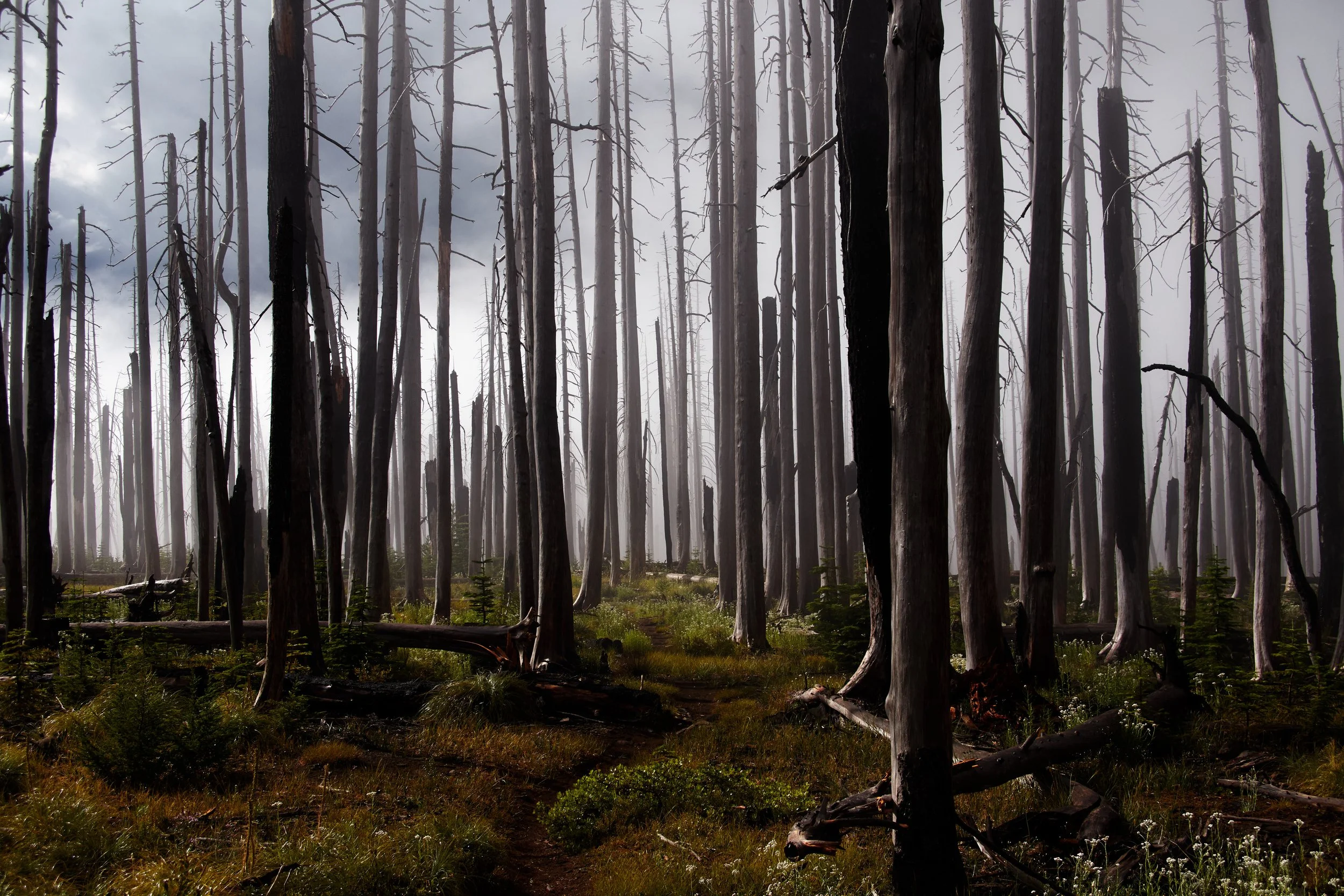
Badlands National Park
It started as a travel camera and it never really stopped being one, but the role has expanded a lot.
Travel. Still the main use. It has been across Korea, around the US, and on more flights than I can count.
Hiking and backcountry. Light enough that I will bring it on trips where I would not bring a larger system, and tough enough that I trust it in weather.
Family photos. Birthdays, holidays, casual stuff at home. The zoom range covers most of what I need without thinking.
Metering for large format. The use I never planned for. More on this below.
Roughly 13,000 frames across all of that. Not a huge number compared to a working pro, but a real sample of how the camera holds up across very different shooting.
Metering for Large Format Film
This is the use that surprised me, and it is the reason I am writing this post now instead of two years ago. The G1X Mark III has quietly become part of my view camera workflow.
Why this camera specifically. The G1X Mark III is one of the only point and shoots that will stop down to f/16. Most compacts top out at f/8 or f/11, which makes them useless for matching large format exposure. f/22 would be the dream because that is where I actually shoot most of my film, but f/16 gets me close enough to calculate from. One stop of math is easy. Two or three stops of math under changing light is where mistakes happen.
ISO 100 base. Just as important. Plenty of compacts start at ISO 125 or 160, which throws the math off before you have even started. ISO 100 lines up cleanly with the films I actually shoot, and it makes the translation to a sheet of film almost automatic.
The workflow. I shoot it in manual mode, usually with evaluative metering, though I will switch to spot when the scene needs it. I judge exposure by the look of the image and by the histogram, leaning on years of experience to translate what the G1X is telling me into what the film will see. From there I factor in reciprocity, bellows extension, and any filter compensation, and commit the sheet.
Why not a dedicated meter. I have used handheld meters. The G1X wins on two things. First, speed. When I arrive at a location and the light is changing, I do not want to spot meter five values and reason about the zone system before I can take a reading. The G1X gives me a framed composition, a histogram, and a near-final answer in seconds. Second, certainty. A misjudged spot reading in the zone system is usually off by a full stop, and a sheet of film can cost anywhere from three to thirty dollars depending on what I am shooting. I would rather trust a histogram I can actually see than a number I had to interpret.
Limitations. The big one is that the lens stops at f/16 rather than f/22, and the base ISO is 100 rather than 50. Since I usually shoot at f/22, and since filters and slow films like Velvia 50 add their own compensation, there is always some math to keep in mind. The focal range also does not match my view camera lenses on either end, so framing through the G1X is approximate rather than exact. None of this is a dealbreaker. It is just the cost of using a digital compact as a film meter.
Image Quality
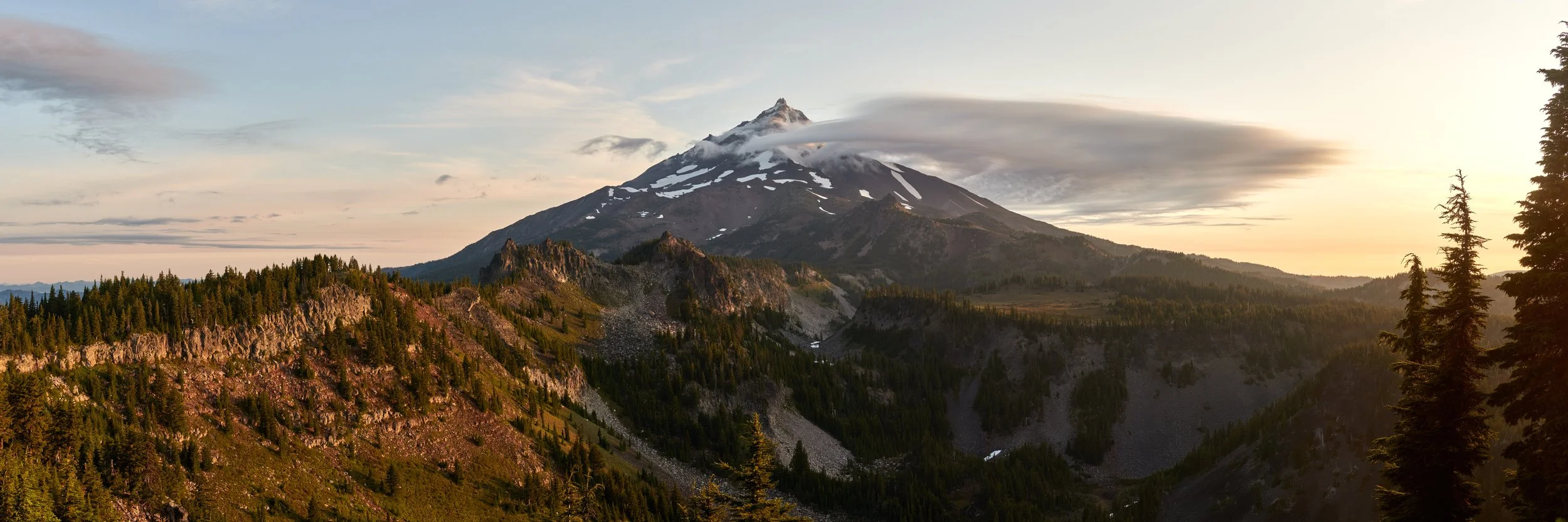
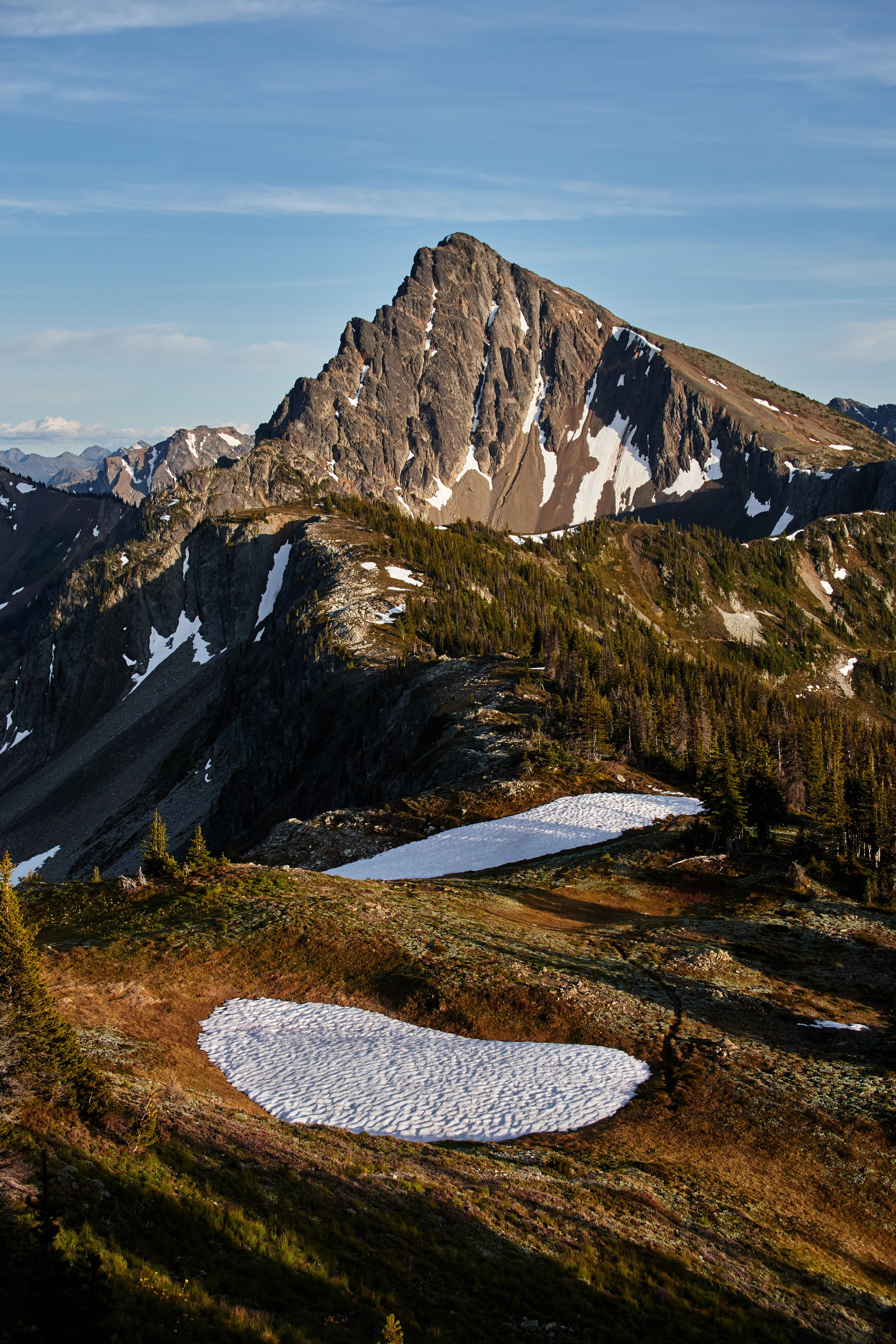
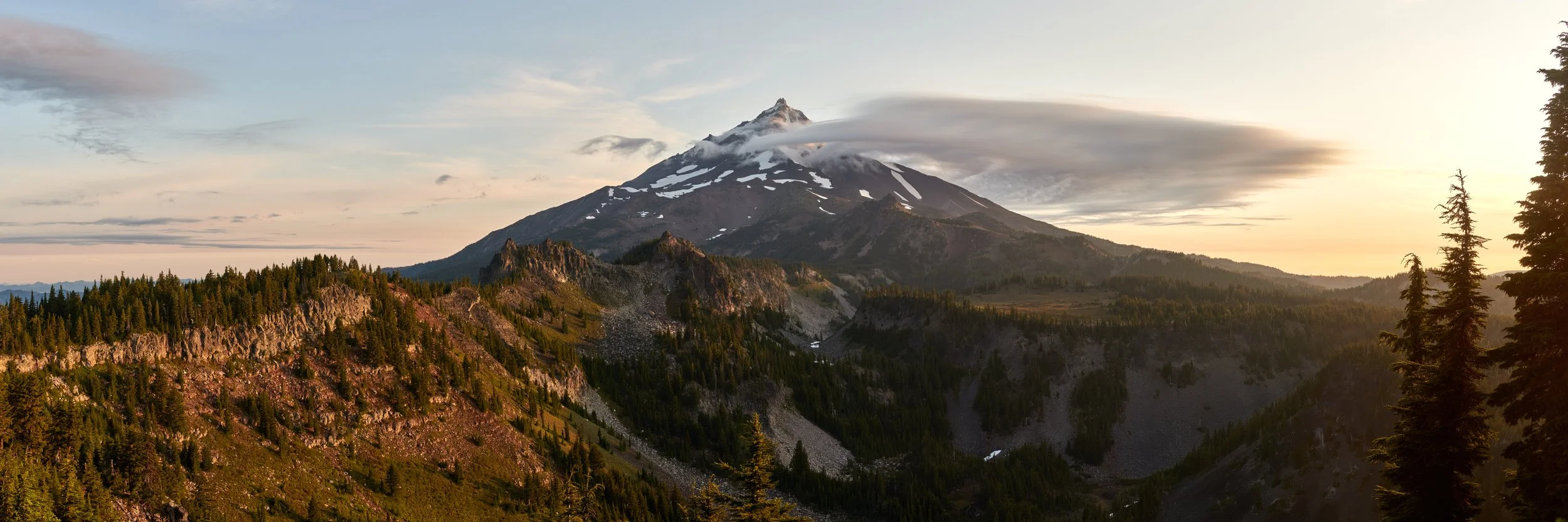
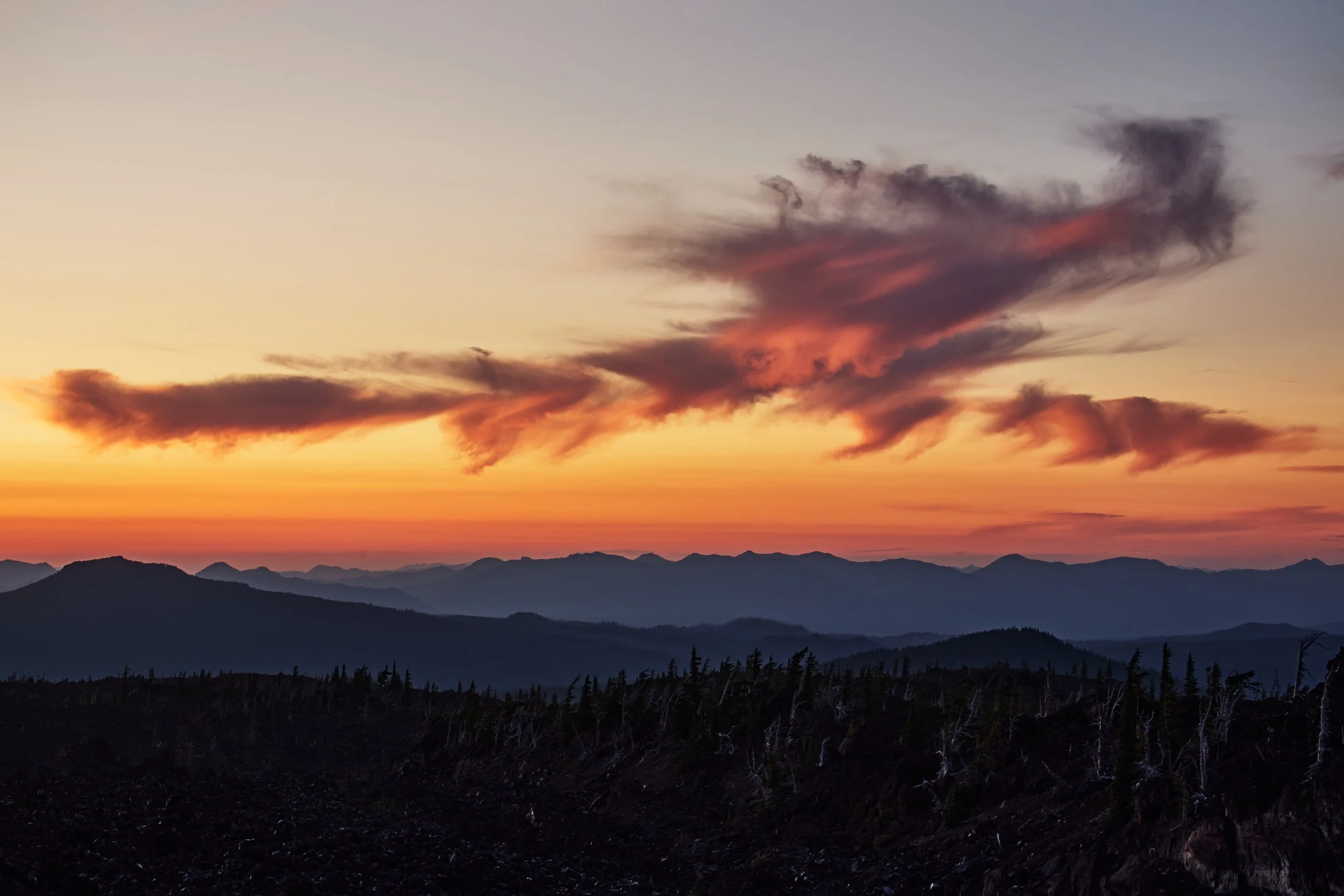
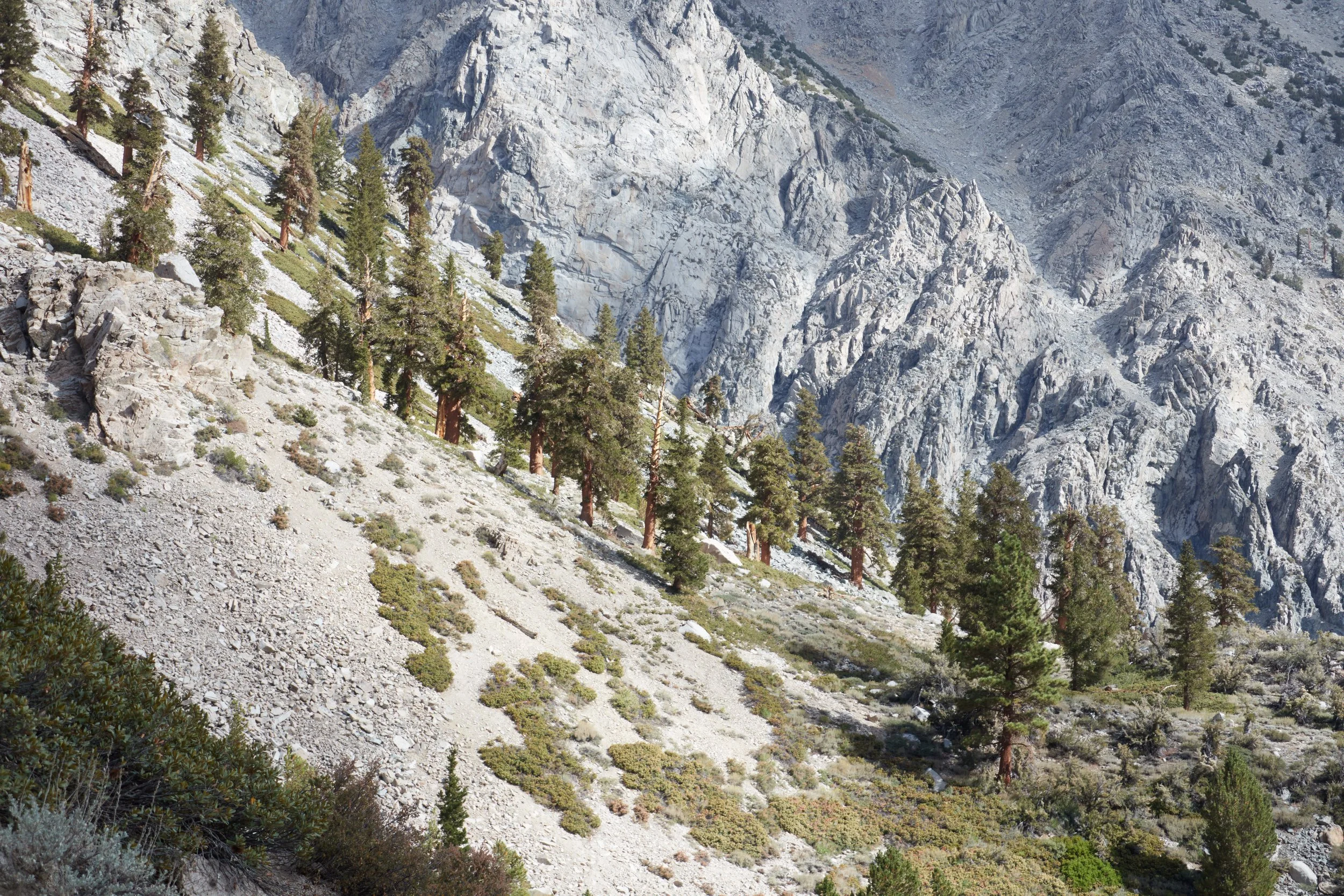
Mt Jefferson Sunrise along the PCT 2019
This is the part I have come to appreciate the most.
It is not full frame and it is not paired with top end glass, so if you pixel peep you are going to be disappointed. The lens needs a lot of distortion correction and meaningful light falloff correction. There is also noticeable chromatic aberration at the wide end. Out of camera, the files have clear flaws.
What changed my mind on all of that is Capture One finally being able to apply the manufacturer profile. Distortion and falloff get corrected automatically on import, and CA cleanup is a single click. Once you stop fighting the raw file and just let the profile do its job, the image quality is genuinely good. At reasonable viewing sizes there is very little left to complain about. Color is pleasant, dynamic range is more than enough for the way I shoot, and the lens is sharp where it needs to be.
It will not beat a full frame body with a great prime. It does not need to. For a camera this size, the files punch well above their weight, and I have made prints and posted images from this camera for years without anyone noticing it was a compact.
Focal range in practice. The 24 to 72mm equivalent range is honest. It is not heroic at either end, but it covers almost everything I want from a walkaround camera. It would be nice if it could reach a little more, maybe 105 or 120mm.
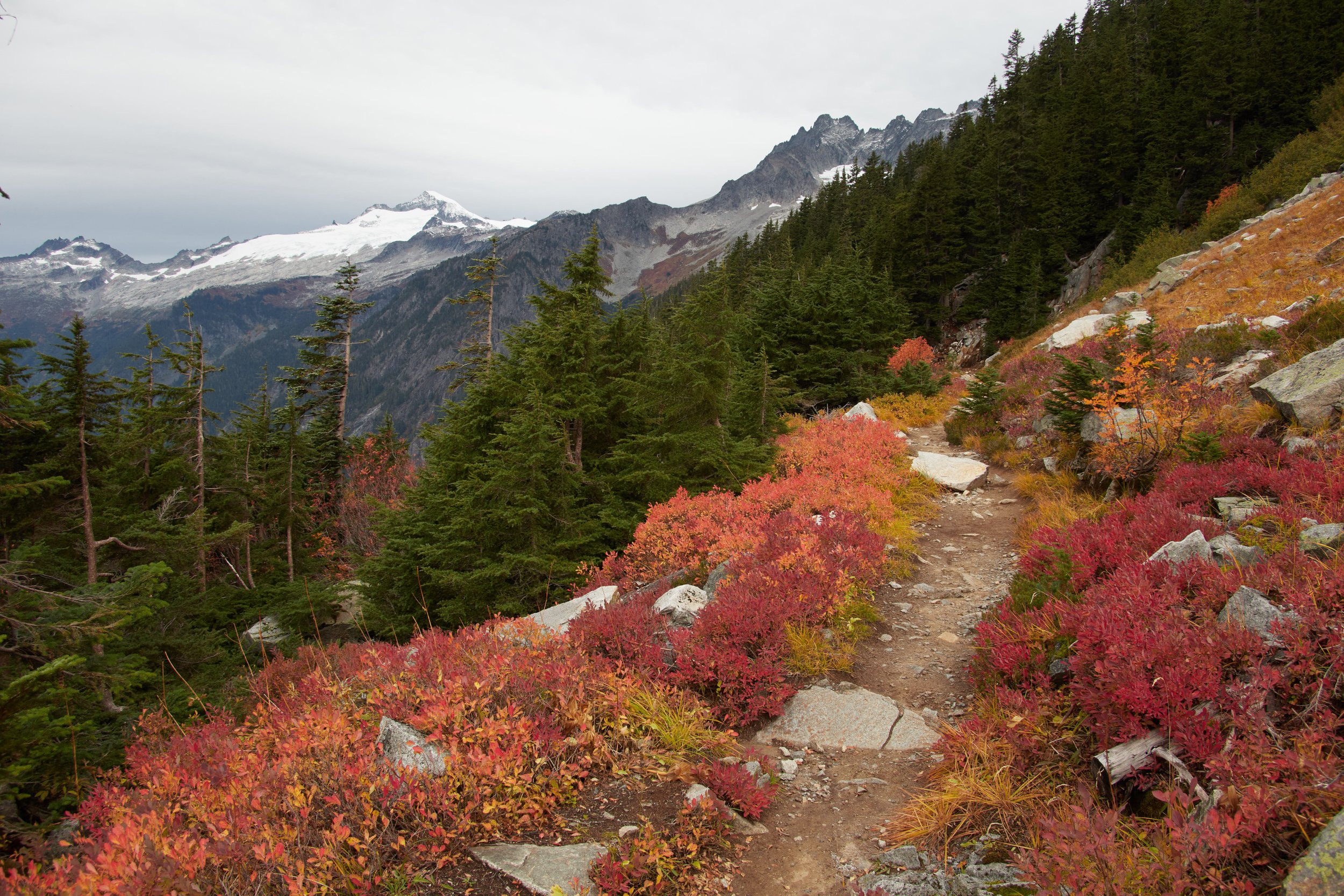
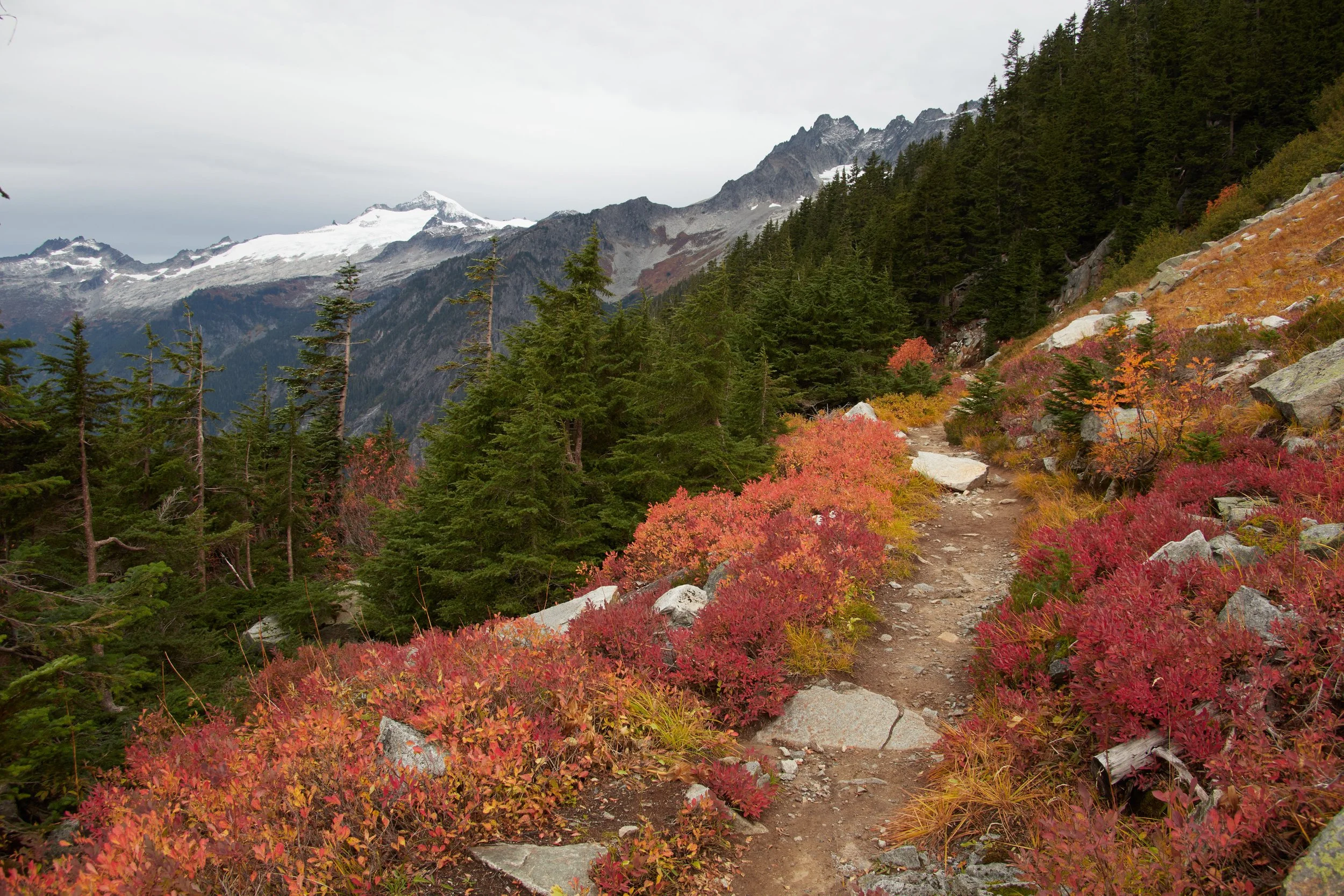
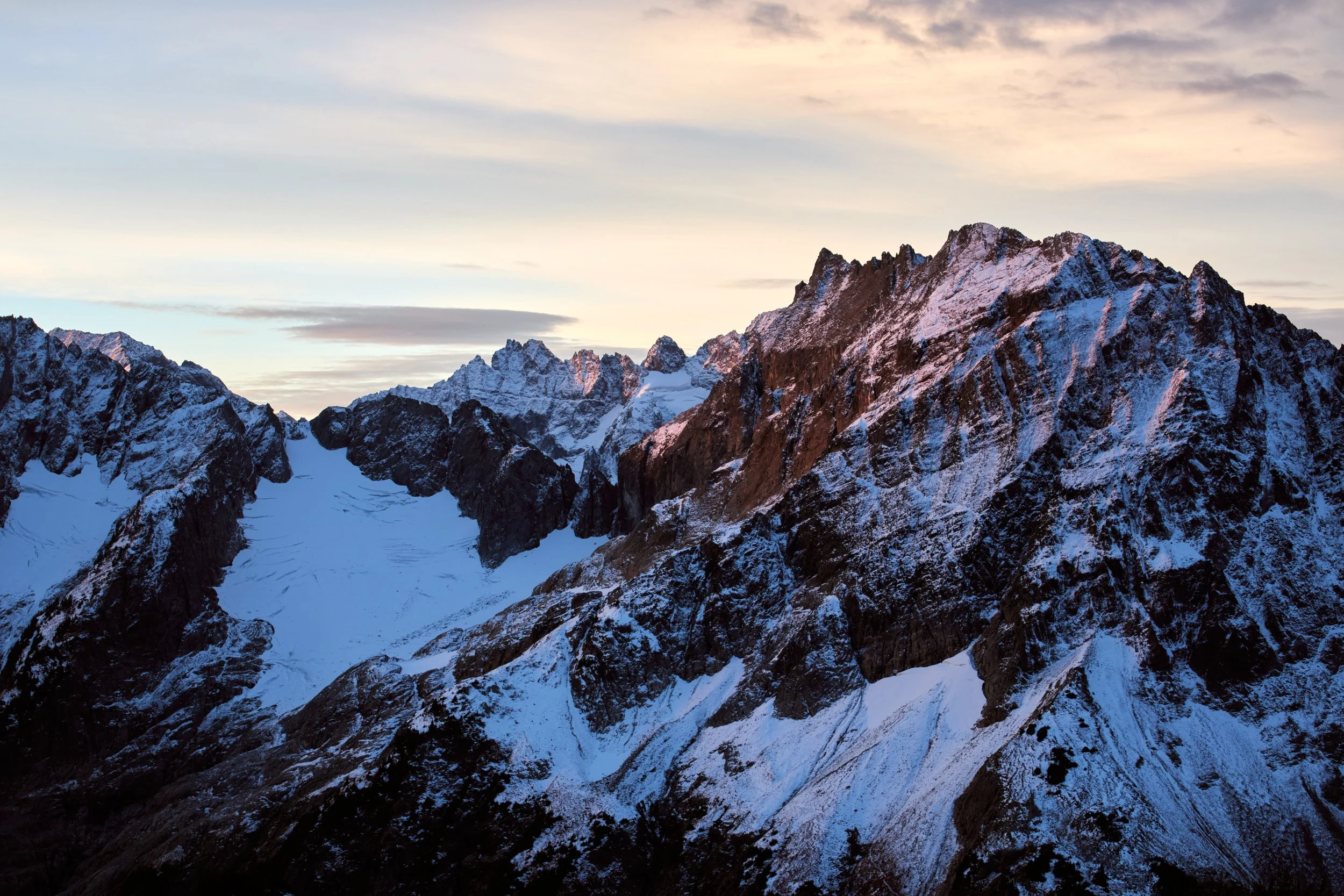
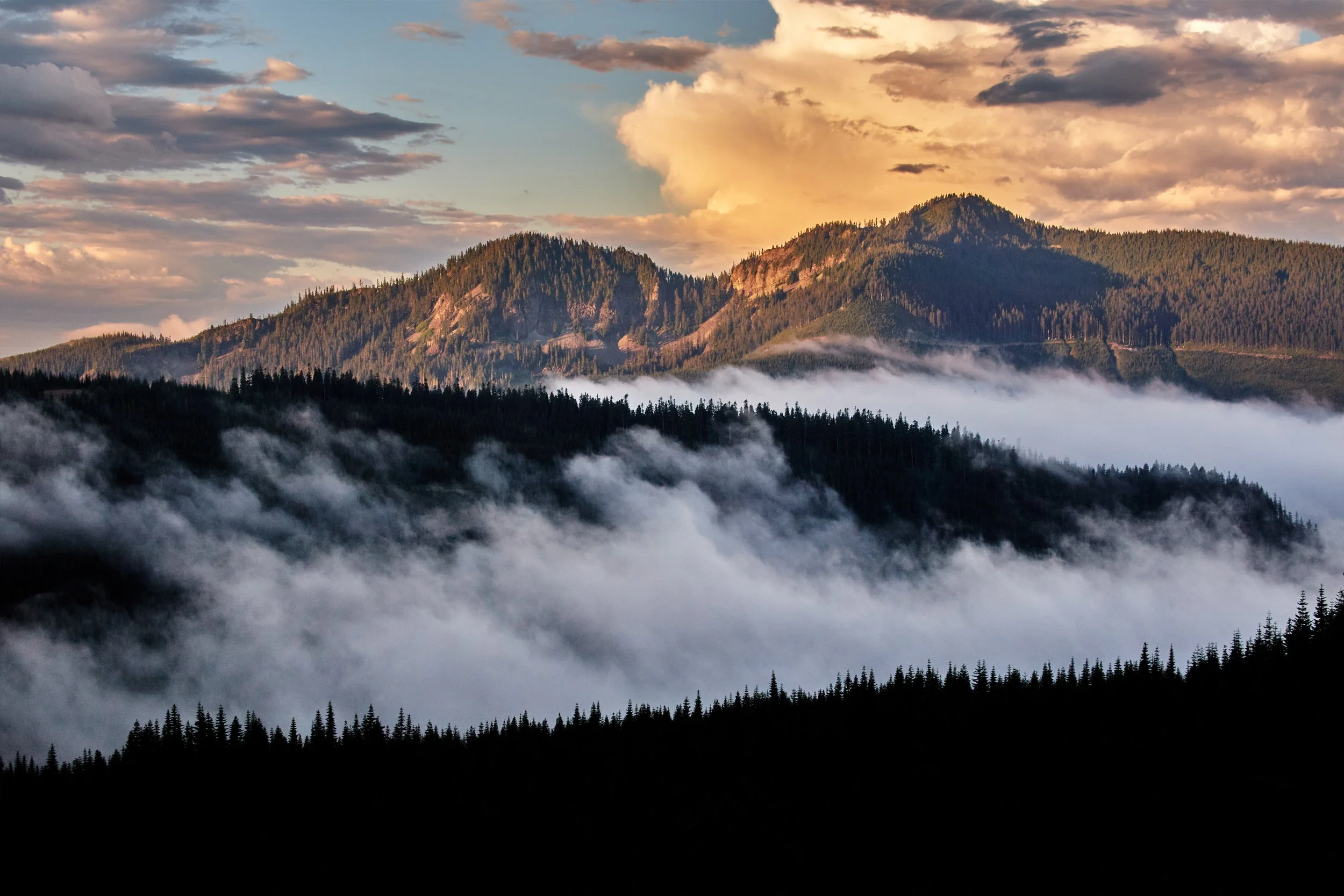
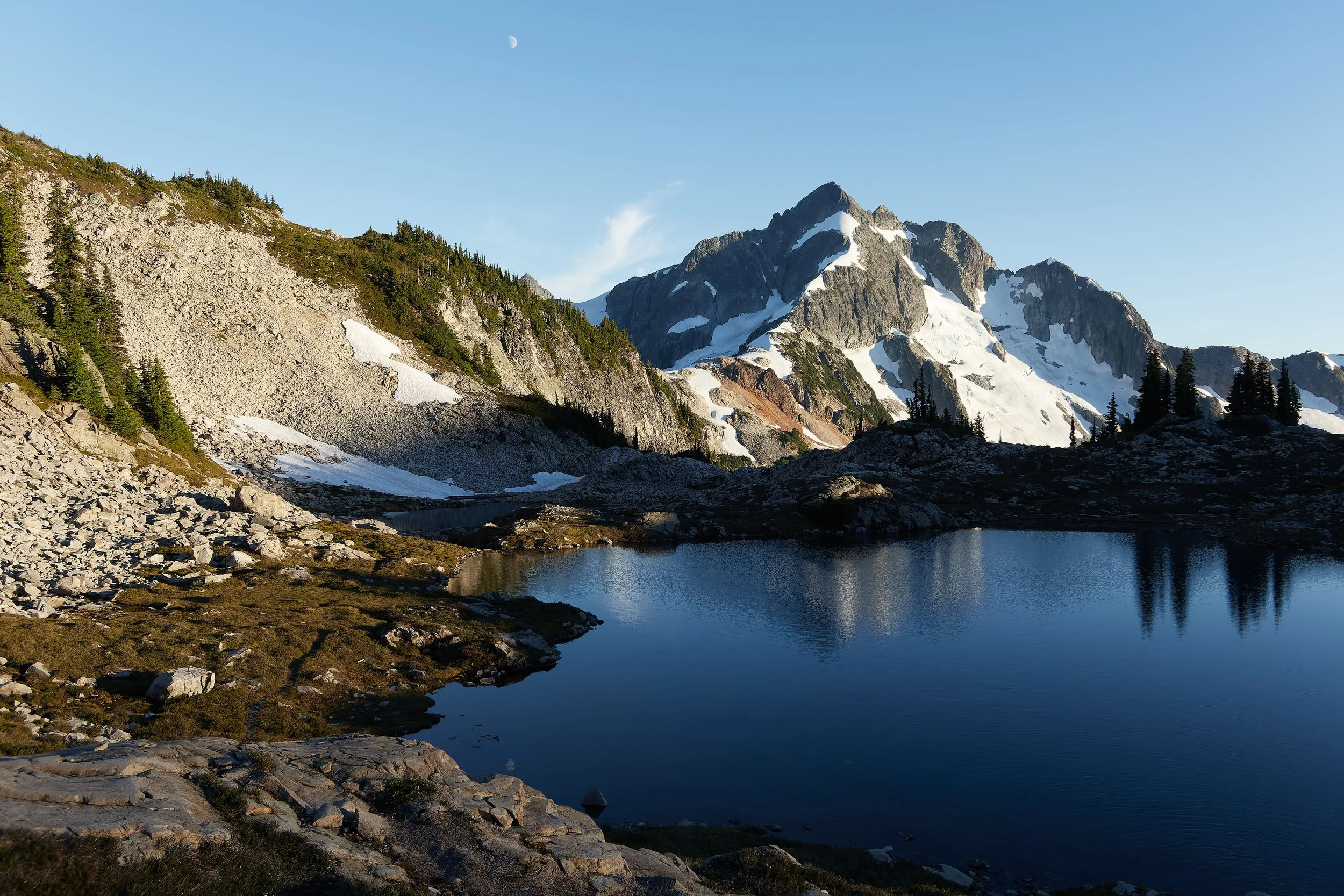
Cascade Pass in fall
Handling and Ergonomics
In the hand. It is small, but it is not as small as it could be. The EVF hump and the lens hood add bulk that the spec sheet does not capture. It will slide into a jacket pocket but you notice it. The lack of an integrated lens cap is a real annoyance. After eight years I have lost track of how many lens caps I have either misplaced or just stopped bothering with, which hasn’t actually been a problem..
Controls. There are not enough assignable buttons for how I want to shoot, and the customization options are too shallow, but I have settled into a setup that works. Why can’t they just map to the same buttons as their other mirrorless cameras?
Battery life. Okay at best. With careful use in the backcountry I can get about three days out of the camera, which is acceptable for a compact this size but not impressive. I carry spares on any trip longer than an overnight.
Durability
I have dropped it. I have had it rained on. It has been scratched and scuffed. It has rarely seen a lens cap. It has been on multiple thru hikes, which means weeks at a time of dust, sweat, sunscreen, weather, and being shoved in and out of a hip belt pocket. The rear screen is cracked. The rear wheel does not always register inputs.
It still keeps kicking. Eight years in, with that kind of treatment, the camera still does its job. I have owned more expensive gear that did not survive a fraction of this.
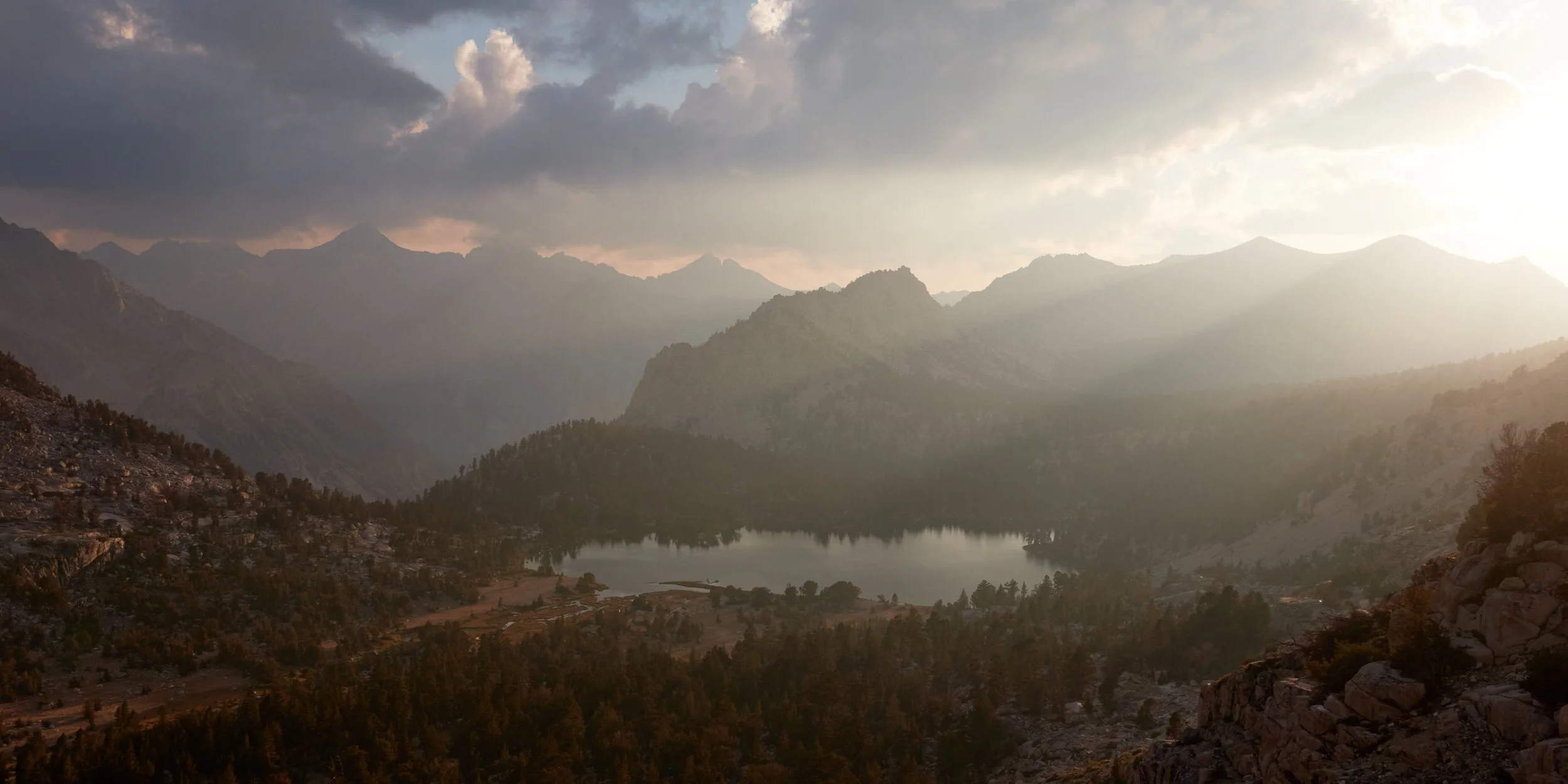
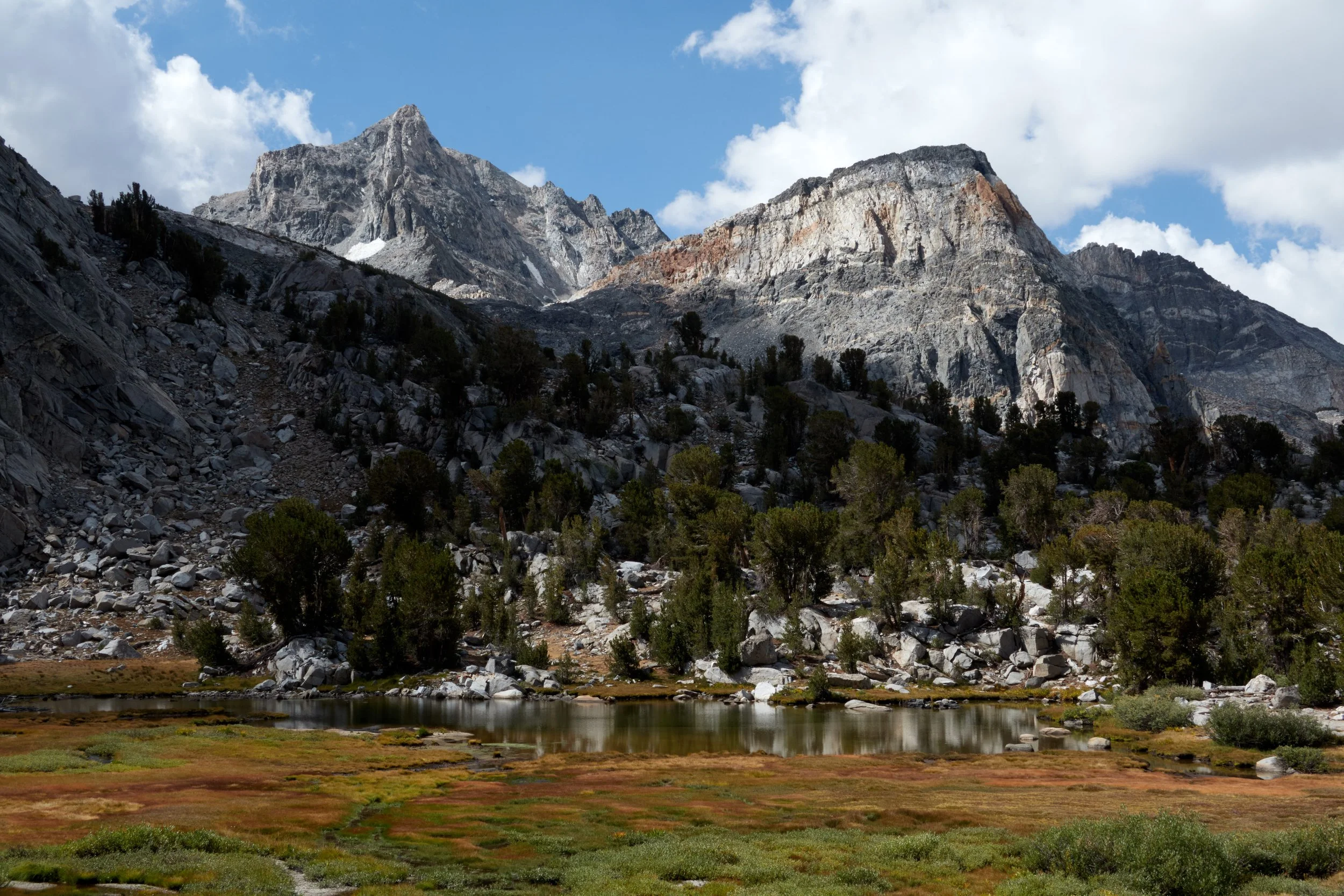
Bullfrog Lake in the Sierra Nevada 2025
What Has Aged Poorly
Several things now feel very dated.
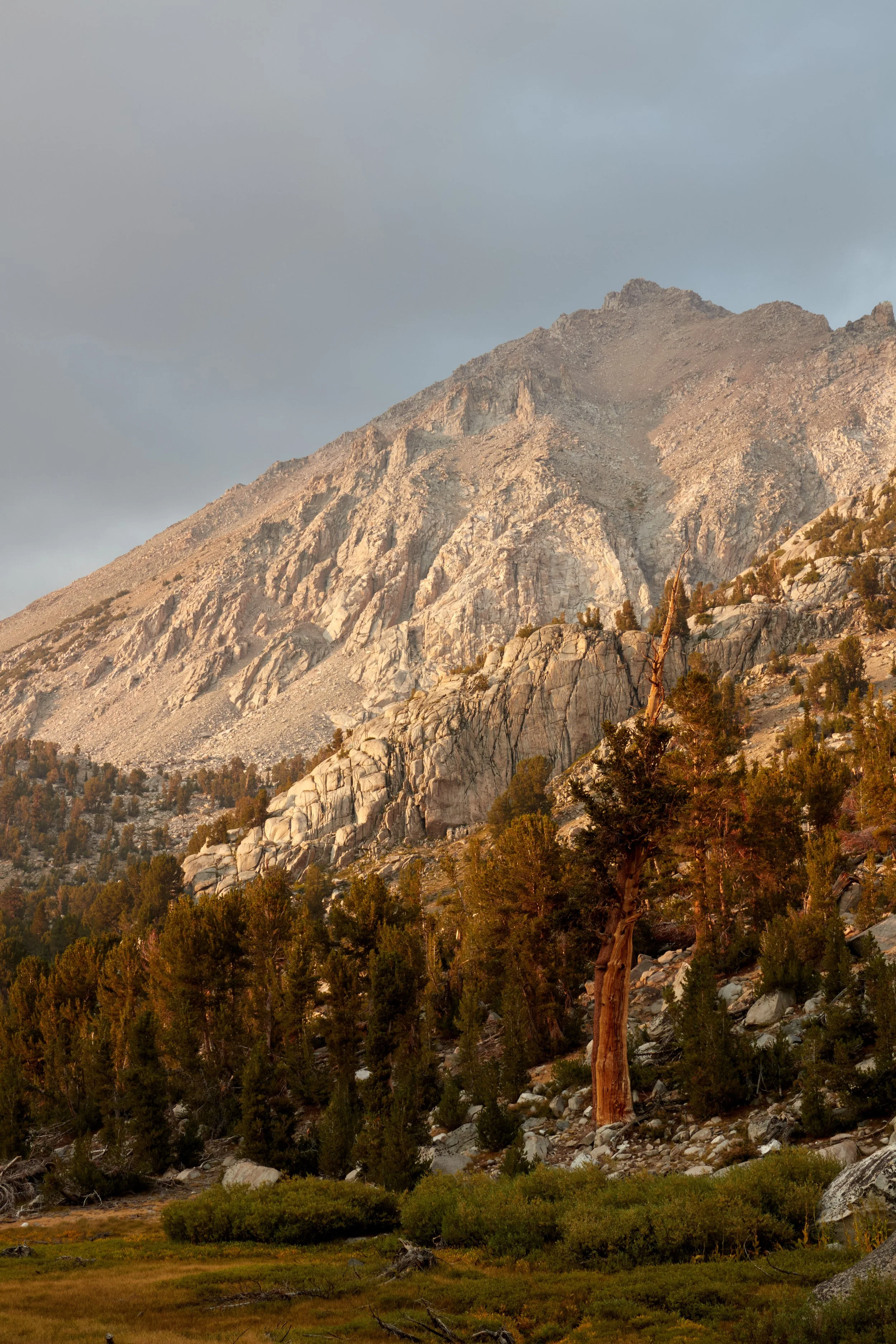
Startup. I wish it was ready to shoot faster.
Autofocus. Basic by modern standards. It works for static subjects and casual people shots, but I would not trust it for anything fast.
EVF. Slow refresh and noticeable lag. Fine for composition, frustrating for action.
Rear screen. The colors are wrong. I do not trust it for evaluating images, only for framing. The fact that it is now cracked has not made things worse.
Customization. Not enough buttons and dials, and not enough flexibility in what you can assign to them. Why cant I map the exposure compensation dial to iso and have full control over the exposure triangle with physical knobs?
Internal backup battery. The little internal battery that keeps the clock running has died. Every time I turn the camera on it asks me to set the time. I can skip the prompt, but it is a daily reminder that the camera is no longer young.
GPS. There is none built in, and the supposed phone-based geotagging never works. I have given up on it. As I got it as a travel camera, this was noticeable from the start especially considering it is not compatible with the gp-e2 gps reciever.
None of these have pushed me off the camera, because nothing else fills the slot.
What I Stopped Caring About
Image quality. Not because it is great, but because it is good enough. At first, I cared a lot about whether the files matched what my bigger cameras could produce. After a few years, I had time to look back at older files and stopped comparing. The G1X is the camera I have when I do not have the other ones, and the files are more than enough for what I do with them. Letting go of that comparison made me a happier owner.
What I Started Caring About
GPS. I did not think I would miss it. After years of looking at images on a map and trying to remember where I shot them, I want it. I would take any working solution, whether that is a built-in module, a real working phone integration, or an accessory port. The G1X is supposed to be able to use a phone for geotagging, but in my experience it has never worked reliably. This is one of the things I would most want fixed in a Mark IV.
I also started caring more about the leaf shutter and the weather sealing than I did when I bought the camera. Both are features I bought almost by accident and have come to rely on.
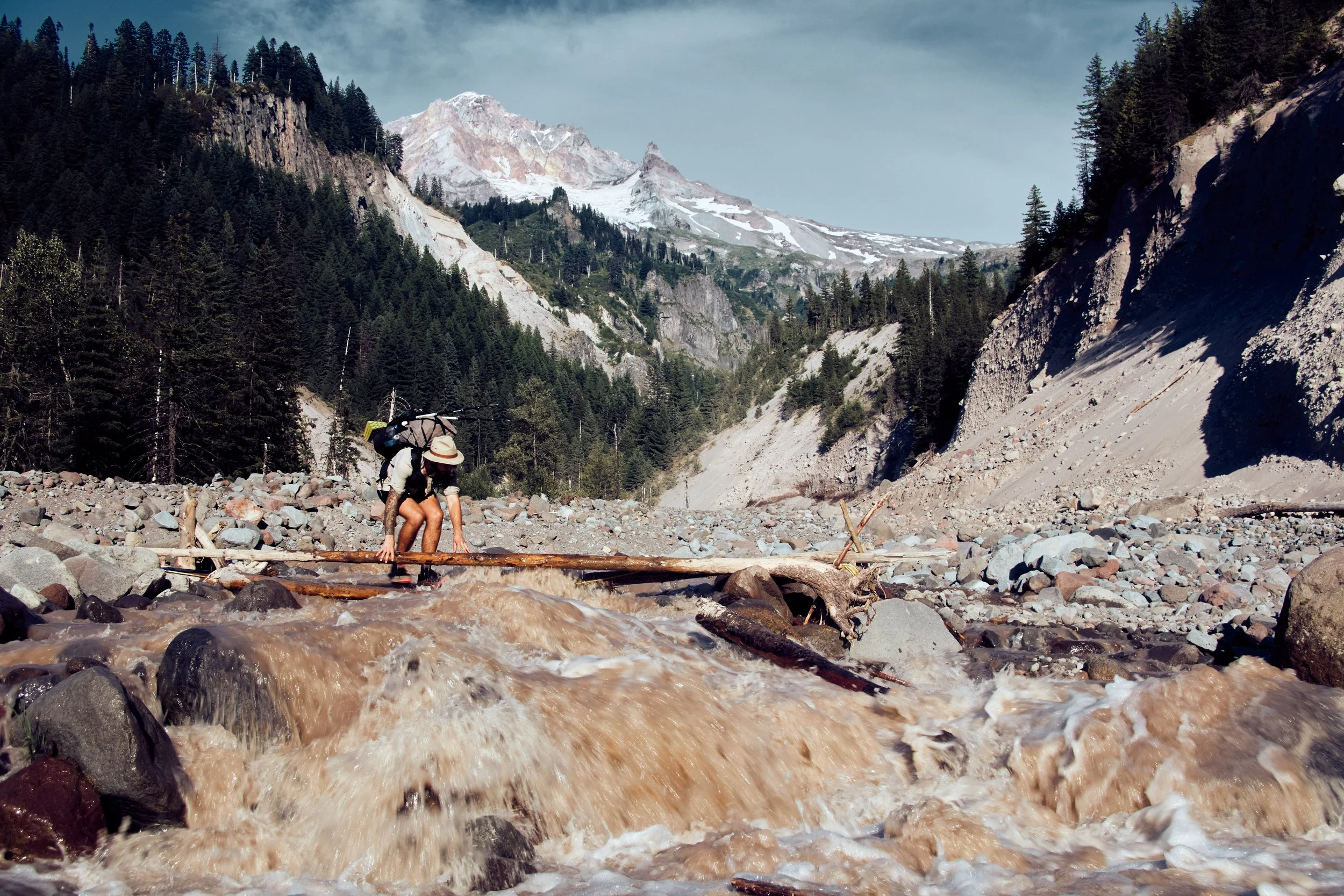
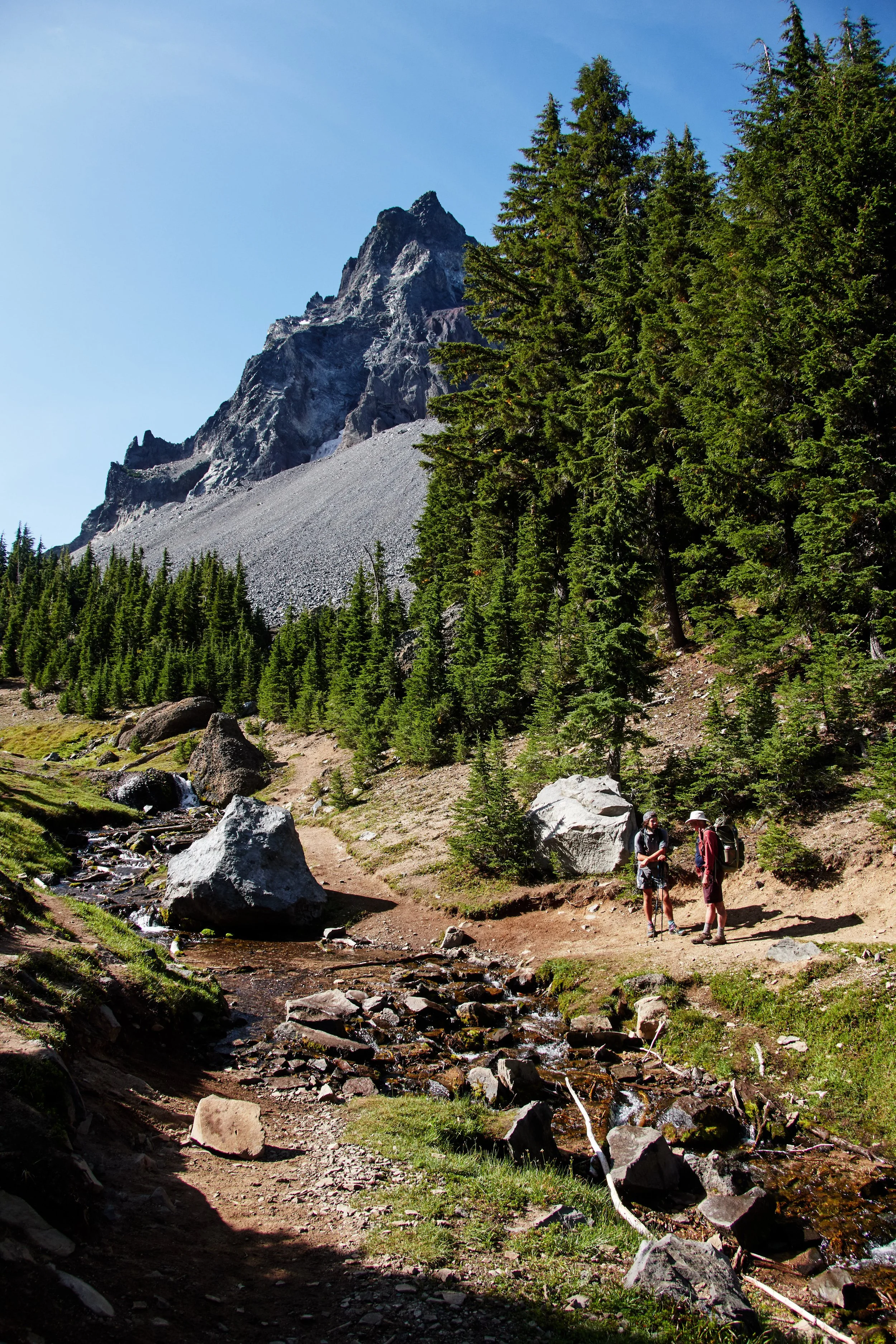
Crossing a river near Mt Hood on the PCT in 2019.
The Competitive Landscape
There are good compacts on the market. None of them are this compact.
Ricoh GR III / GR IIIx. Beloved for good reason, but no zoom, no EVF, and weather sealing is not in the same conversation.
Fuji X100VI. A wonderful camera, but bigger, fixed lens, and significantly more expensive.
Sony RX100 series. Smaller sensor, which matters for the way I use the G1X for metering and for the image quality at reasonable sizes.
Smartphones. A different tool. I use mine all the time. It does not replace a real camera with real controls and a real zoom.
The G1X Mark III is alone in the specific intersection of APS-C, pocketable, zoom, EVF, and weather sealing. That is the whole reason I am still shooting it.
What I Want from a Mark IV
I would spend real money on a refresh. The wish list is not exotic.
A modern autofocus system.
A modern EVF with higher resolution and a faster refresh rate.
An accurate rear screen.
Real customization. More assignable controls, deeper menu options.
GPS that actually works, or a reliable phone integration that does.
An aperture range that goes to f/22 and a base ISO of 50, both for film metering and for daylight long exposures.
Keep everything else. APS-C sensor, leaf shutter, weather sealing, pocketable body, useful zoom range. Do not chase a different category. Just modernize the one Canon already nailed.
That camera does not exist anywhere on the market right now, from any manufacturer. If Canon made it, I would preorder it.
In summary
After eight years and about 13,000 frames across travel, hiking, family, backcountry, and large format film, the G1X Mark III is still the only camera that does what it does. The image quality has held up better than the spec sheet suggests, the durability has exceeded any reasonable expectation, and it has earned a permanent place in my large format workflow. The things that have aged poorly are real but livable. If you can find a clean copy used and you need a true pocket camera with an APS-C sensor and weather sealing, buy it. Go in knowing the AF and EVF are dated and that you will lean on lens corrections in post.
Canon, please make a Mark IV. I am ready.